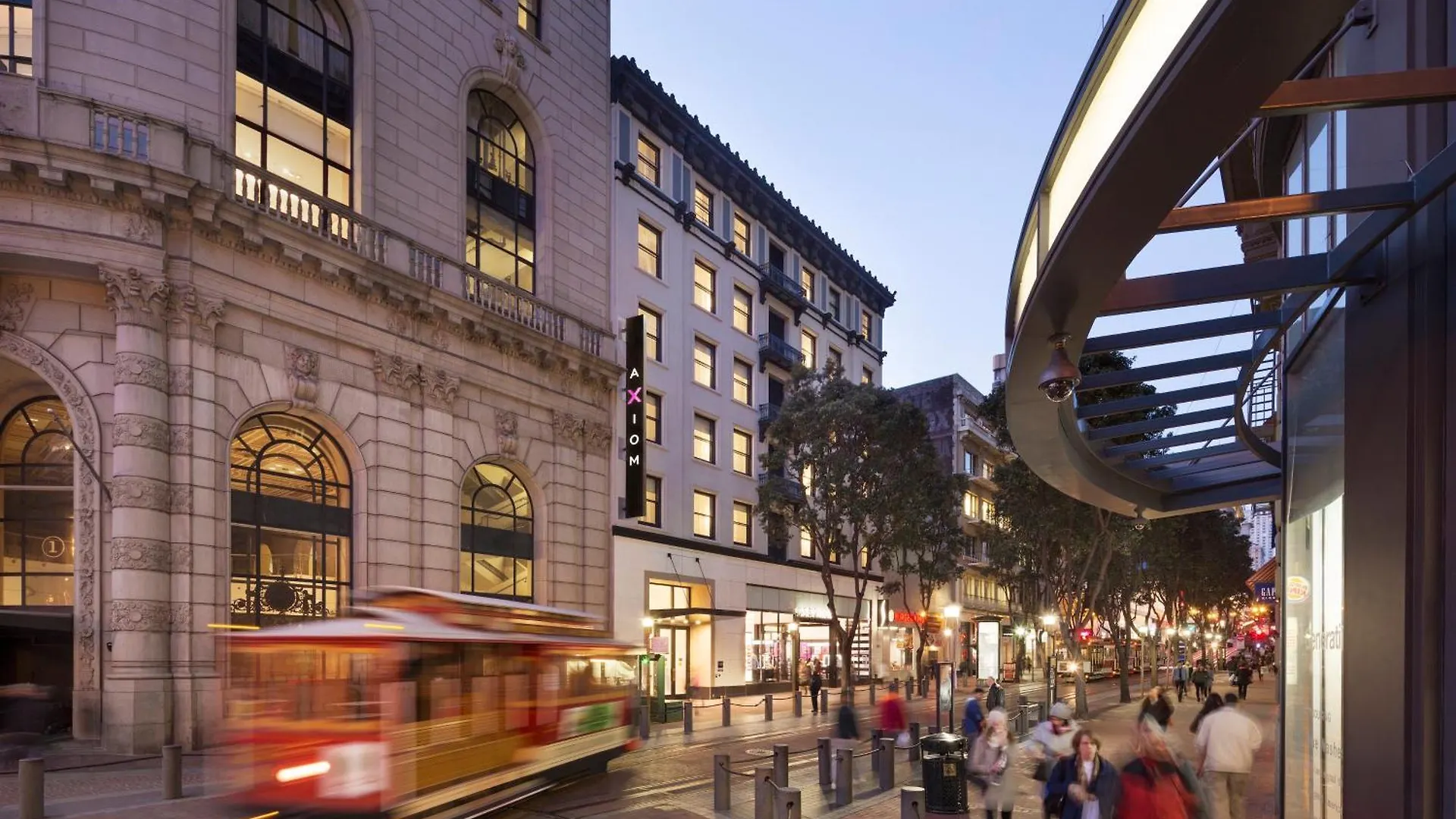
Downtown San Francisco - anchored by Union Square and bordered by the Financial District, Chinatown, and Nob Hill - concentrates some of the city's most architecturally distinctive hotels within a walkable core. This guide compares three exceptional design hotels in the area, with honest location insights, room-level details, and booking context to help you decide which property fits your trip.
What It's Like Staying In Downtown San Francisco
Staying in Downtown San Francisco puts you within a 15-minute walk of Powell Street BART, the Ferry Building, Chinatown, and the Theater District - a density of access that few other San Francisco neighborhoods can match. Union Square operates as a genuine transit hub, with cable car lines, the Central Subway, and multiple Muni routes converging there, meaning you rarely need a car. That said, the area directly west of Jones Street - the Tenderloin - is visibly rough, and guests walking back late at night from SoMa or the ballpark should plan routes carefully or use rideshare.
The neighborhood is loud and active from early morning well past midnight on weekends, driven by retail traffic, convention attendees, and theatre crowds. Around 40% of San Francisco's hotel stock sits within or adjacent to this core - a competitive supply that keeps pricing in check outside peak convention weeks, but also guarantees noise.
Pros:
- * Powell Street BART connects you to SFO and the East Bay without a cab - a real daily convenience
- * Chinatown, the Ferry Building, and Yerba Buena Gardens are all under 20 minutes on foot
- * High concentration of restaurants, theaters, and shopping means most evenings require zero transport
Cons:
- * Street noise from cable cars, delivery trucks, and foot traffic starts before 7am on most blocks
- * The Tenderloin begins immediately west of Jones Street - route awareness matters at night
- * Hotel rates spike hard during Oracle OpenWorld and Fleet Week, sometimes with little warning
Why Choose Exceptional Design Hotels In Downtown San Francisco
Design hotels in Downtown San Francisco aren't simply about aesthetics - they embed tech-forward infrastructure, curated interiors, and service details that standard chain properties in the same zip code don't offer. In a neighborhood where the visual environment can feel corporate or dated, these properties use architecture and room programming to actively differentiate the experience. Century-old building stock in Union Square gives design operators raw material that newer construction cities simply can't replicate - exposed structural elements, large-format windows, and original facades become part of the product.
Expect to pay a premium versus mid-range chain hotels on the same blocks, but the gap typically comes with meaningfully larger room programming: dedicated work zones, streaming-ready entertainment setups, and signature bath amenities. The trade-off is real though - compact room footprints in historic buildings are fixed, meaning rooms can feel intentional but tight, especially where original layouts can't be altered. Guests who need space over style may find the value harder to justify.
Pros:
- * Historic Union Square architecture gives design hotels genuine visual character unavailable in purpose-built towers
- * Room technology (fiber WiFi, smart TVs, Bluetooth audio, digital check-in) consistently leads standard-category hotels in this zone
- * On-site dining and bar concepts in design properties tend to be locally curated, not generic hotel F&B
Cons:
- * Room footprints in historic buildings are often fixed - suites are the exception, not the standard
- * Premium pricing doesn't buffer against convention-season surges - rates move as aggressively as any other Downtown property
- * Valet parking costs add up fast in this district - few design hotels offer self-park alternatives
Practical Booking & Area Strategy
For the best micro-location within Downtown, target properties on or north of Geary Street between Powell and Mason - this keeps you in the active Union Square core while sitting one block clear of the heaviest cable car noise. Powell Street BART puts SFO around 30 minutes away by train, making it a genuinely practical alternative to a $60 rideshare. Alcatraz ferry departures leave from Pier 33 on the Embarcadero - accessible via the F streetcar from Market Street in under 15 minutes - while Fisherman's Wharf is a walkable 1.6 km from the Union Square cluster, connecting you to two of San Francisco's most visited destinations without a cab.
Book at least 6 weeks out if your dates overlap with September or October, when Oracle OpenWorld and Fleet Week together can absorb over 16,000 rooms citywide. January and February offer the softest pricing in this zone, and while the weather is cooler, Downtown's indoor density - theaters, SFMOMA, restaurant rows - keeps the visit viable. For design hotel stays, plan for at least 2 nights: the check-in experience, room discovery, and neighborhood rhythm take time to pay off.
Best Value Stay
The Axiom Hotel delivers the strongest price-to-design ratio among Downtown San Francisco's design properties, with tech-integrated rooms sitting 300 metres from Union Square's retail and dining core.
-
1. Axiom Hotel
Show on map


 Check-infrom 15:00 until 23:59Check-outuntil 12:00
Just a few rooms left at the best rate!
fromUS$ 79
Best Premium Stays
Both the Grand Hyatt San Francisco Union Square and The Huntington Hotel represent the upper tier of design-conscious Downtown stays - one delivering scale, bay views, and executive infrastructure in the heart of Union Square, the other offering Nob Hill positioning for guests who prioritize quiet elevation over central density.
-
2. Grand Hyatt San Francisco Union Square
Show on map


 Check-infrom 16:00 until 23:59Check-outuntil 12:00
Hurry – almost gone at this price!
fromUS$ 134
-
3. The Huntington Hotel
Show on map


 Check-infrom 16:00 until 23:59Check-outuntil 12:00
Rooms filling fast – secure the best rate!
fromUS$ 236
Smart Travel & Timing Advice
September and October are San Francisco's warmest months - average highs reach around 70°F (21°C) - but they are also the most expensive period to book Downtown hotels, with Oracle OpenWorld alone absorbing an estimated 21,000 rooms at peak. Book 6 weeks out as the practical minimum for this window; waiting for last-minute deals in September or October in Downtown San Francisco almost never pays off. Summer (June through August) brings the city's highest visitor volume but also its signature afternoon fog, which rolls in off the Bay and drops temperatures into the low 60s by late afternoon - guests expecting warm evenings on rooftop terraces should factor this in.
January and February represent the softest pricing window for design hotels in this zone, with meaningfully lower nightly rates and thinner crowds at major attractions like SFMOMA and Chinatown. Plan at least 3 nights to get full value from a Downtown San Francisco design hotel - enough time to use the walkable density, experience on-site dining properly, and justify the premium room programming. For anyone attending a major convention at Moscone Center, book the moment conference dates are announced - Downtown inventory moves within days of major event announcements.